The Wan 3.0 Phrase That Stuck: Omni-Reference (And Why Pixel-Level Matters)
Scroll the Wan 3.0 chatter long enough and the vocabulary clusters.
People are not mostly arguing about another Elo screenshot. They are repeating a handful of sticky phrases: omni-reference, pixel-level consistency, smart duration, native 30s, native audiovisual. The rumor web still tries to hijack the feed with 4K open-weight mythology. Creators who have actually been burned by silent five-second clips keep circling back to control language instead.
That is the interesting story around Alibaba’s Wan 3.0 — and the reason Wan 3.0 on Topview reads less like a demo toy and more like a production bet.
What the loud words actually mean
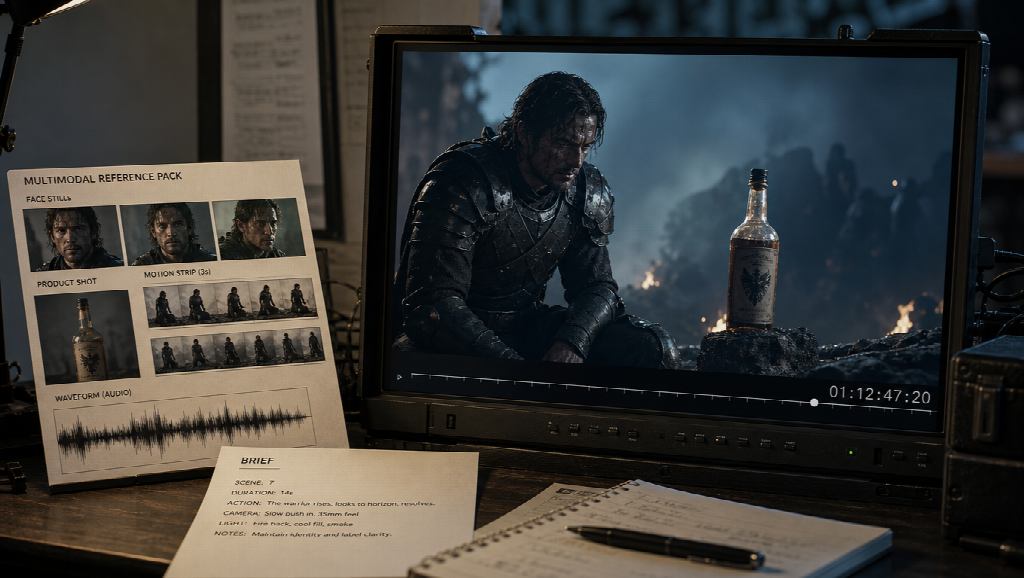
Omni-reference is the headline. Not “upload one pretty still.” The Wan 3.0 surface on Topview is built for multimodal packs: text, images, video, audio, plus documents and webpages when the brief already lives outside the prompt box. The model is being asked to keep the important details under control across a longer native window — toward thirty seconds — instead of inventing a new warrior every cut.
Pixel-level consistency is the anxiety underneath the slogan. It is creator shorthand for: face, armor, bottle label, room geometry, and sound cue should still agree near the end of the clip. Whether every third-party site uses the phrase correctly is beside the point. The market is telling labs that identity drift is the product bug, not a vibe.
Smart duration is the anti-padding feature people keep hoping for. Force every idea into thirty seconds and you get floating camera in the middle. Let duration follow intent — including the invite-era pattern where the system can recommend length from the brief — and the model stops pretending every beat needs a trailer runtime.
Native audiovisual is the hangover cure after a year of mute plates. Sound that arrives with the picture changes how you write the brief: clashes, hoofbeats, room tone, and dialogue belong in the shot list, not in a separate shrug.
Why this discourse beat the old Wan conversation
Wan 2.7 already lived in the multimodal hosted lane — T2V, I2V, reference, edit surfaces, audio on many paths. The complaint that kept showing up in creator circles was operational: too many tool swaps, clips that died before a story turn, references that only meant “kind of like this photo.”
Wan 3.0’s invite-era pitch answers that complaint with mode discipline and a longer native ceiling. Omni-reference or first/last-frame — pick a control philosophy. Duration that can be fixed or smart. Audio on by default. Thinking when a PDF or public page is the real source of truth. That package is why the discourse shifted from “can it make a pretty clip?” to “can it hold my pack for half a minute?”
The rumor tax
Every hot model accrues SEO satellites. Wan 3.0 is no exception: native 4K forever, open weights tomorrow, minute-long single takes by Tuesday. Treat those as marketing until Alibaba’s own notes and the product surface you are actually using agree.
On Topview’s Wan 3.0 page, the production envelope that matters for most creators right now is closer to 1080p-class generation, native length toward 30 seconds, omni-reference control, and audiovisual impact — not a fantasy master from a random landing page.
If your evaluation still starts with the loudest unverified bullet, you are testing marketing. If it starts with whether Image 1’s face still holds at second twenty-five while the audio belongs to the scene, you are testing Wan.
What creators are really stress-testing
Watch the examples people share when they stop performing for the algorithm:
- A medieval fight that keeps the same spear and eyes through smoke
- A quiet sci-fi walk that needs environment storytelling more than a jump cut collage
- A dramatic reveal that lives or dies on close-up restraint
- An anime beat that must keep style locked while the scene turns
Those are omni-reference jobs. They punish empty prompting. They reward role-labeled media (“Image 1 is face lock; Video 1 is horse motion only”) and punish mixing first/last-frame rules into a reference soup.
Smart duration shows up in the same tests as a taste check: if the model stretches a one-gag idea into a forced half-minute, creators call it padding. If it sizes the clip to the beat, they call it direction.
Where Wan 3.0 sits in the 2026 stack (without another rankings table)
Seedance talk dominates when the kit is heavy and timestamp surgery matters. Omni Flash talk dominates when preference Elo and natural-language edit are the flex. Wan 3.0 talk dominates when the brief is asset-conditioned storytelling — including paperwork and pages — inside a single longer AV unit.
That is a lane, not a crown. Lanes are how production teams ship.
A sharper way to read the hype
Ignore the account that only posts “Wan 3.0 destroyed everything” with no reference pack. Watch for language like:
- omni-reference / multimodal pack
- pixel-level / identity hold
- smart duration / no padding
- native audio with the picture
- first frame locked, middle invented
That vocabulary is the real signal. It matches what Topview surfaces on Wan 3.0: give every idea more room to become a story, then keep the details that matter under control.
Bottom line
Wan 3.0 did not win the timeline by inventing a new adjective for “cinematic.” It won a vocabulary fight about control.
Omni-reference is the sticky phrase because creators are tired of orphan stills. Pixel-level is the sticky anxiety because drift kills series and ads alike. Smart duration and native AV are the sticky quality-of-life demands after a year of mute fragments.
If that is the conversation you are actually in, open Wan 3.0 with a real pack and a timed beat — then judge the model at the second where lesser clips usually fall apart.