Telegram Marketing in 2026: How to Grow a Channel and Promote Your Business

Quick Answer
Telegram marketing is the use of channels, groups, Business accounts, bots, Mini Apps, and paid placements to attract an audience, communicate with customers, and drive measurable actions. A strong strategy starts with one clear goal, uses a channel for publishing and a group or direct messages for conversation, promotes the community through relevant sources, and tracks views, clicks, leads, and sales instead of focusing only on subscriber count.
Key Takeaways
- Use a channel for one-to-many publishing, a group for community discussion, and a Business account or bot for customer conversations and automation.
- Build a useful content archive before promoting the channel so new subscribers immediately understand why they should stay.
- Combine owned distribution, partnerships, public discovery, and carefully tested ads. Do not buy fake or untargeted subscribers.
- Measure view rate at a consistent time after publishing, plus clicks, conversions, cost per subscriber, and revenue.
- Describe Telegram privacy accurately: regular cloud chats are encrypted but are not end-to-end encrypted by default; Secret Chats are end-to-end encrypted.
What Is Telegram Marketing?
Telegram marketing means using Telegram to distribute content, build a community, answer customer questions, automate workflows, advertise, and sell products or services. It can support awareness, lead generation, customer support, retention, and monetization, but it works best when the platform has a specific role in the customer journey.
For example, a local business might use a channel for product drops, a linked discussion group for questions, and a Business account for private inquiries. A software company might publish release notes, use a bot to qualify leads, and send visitors to a demo page. A creator might combine a public channel with paid subscriptions or premium content.
Telegram should not be treated as a shortcut to instant reach. Subscribers can mute notifications, leave a channel, or ignore repetitive promotions. Sustainable results come from relevant content, a clear publishing rhythm, and ethical audience acquisition.
Why Telegram Matters for Marketers in 2026
Telegram’s official advertising site states that 1 billion users generate 1 trillion monthly views in public broadcast channels. The platform also supports channels with unlimited subscribers and groups with up to 200,000 members, according to the Telegram FAQ.
Scale is only part of the opportunity. Telegram combines broadcast publishing, large communities, direct messaging, automation, payments, public discovery, and lightweight in-app experiences. This makes it useful for businesses that need a direct communication layer rather than another traditional social feed.
What Changed in Telegram Marketing Recently?
- Telegram Business added opening hours, location, quick replies, greeting and away messages, a custom start page, and chatbot support for business accounts.
- Public post search and recommended/similar channels created more ways for people to discover public content inside Telegram.
- Channels can enable direct messages, allowing subscribers to contact owners or admins without exposing the owner’s personal account.
- Mini Apps, Telegram Stars, paid media, and paid invite links expanded the options for commerce and creator monetization.
- In 2026, Telegram introduced AI summaries for long channel posts, an AI text editor, richer polls, and Communities that can connect several channels, groups, or bots around one topic.
- A rich text editor introduced in July 2026 lets Premium users create longer, more structured posts with headings, lists, tables, quotes, and inline media.
Telegram Channels, Groups, Business Accounts, Bots, and Mini Apps
The right setup depends on the job you need Telegram to perform. Many businesses use more than one format, but each should have a clear purpose.
| Tool | Best use | Important limitation |
| Channel | Announcements, educational content, launches, offers, media, and one-to-many publishing. | Subscribers do not automatically become customers; comments require a linked discussion setup. |
| Group | Community discussion, support, feedback, peer learning, and user-generated content. | Large groups require moderation, permissions, spam control, and clear rules. |
| Business account | Private customer conversations, business profile details, quick replies, greeting/away messages, and chatbot support. | It is a conversation layer, not a replacement for a public content strategy. |
| Bot | FAQs, onboarding, lead qualification, notifications, bookings, payments, and workflow automation. | A useful bot needs clear consent, maintenance, hosting, error handling, and a human fallback. |
| Mini App | Catalogs, ordering, games, loyalty programs, tools, and interactive services inside Telegram. | Development and measurement are more complex than running a basic channel or group. |
| Community | Linking several related channels, groups, and bots into one topic-based ecosystem. | A multi-space structure needs clear navigation and distinct roles for each chat. |
Benefits of Telegram Marketing for Business
1. Direct Distribution Without Depending Entirely on a Social Feed
Channel posts appear in a subscriber’s channel list, and users can choose whether to receive notifications. This creates a direct distribution path, but it does not guarantee that every subscriber will see every post. Relevance, timing, notification fatigue, and the number of channels a person follows all affect performance.
2. Flexible Content and Community Formats
A Telegram post can include text, images, video, audio, files, polls, reactions, links, and live broadcasts. A linked discussion group can turn a broadcast channel into a two-way community. In 2026, richer formatting also makes it easier to publish guides and long-form updates directly in Telegram.
3. Automation and Faster Customer Response
Telegram Business supports practical tools such as quick replies, opening hours, location, greeting messages, away messages, and chatbots. Bots can handle repetitive questions, collect structured information, send reminders, and route complex cases to a person.
4. Organic and Paid Discovery
Public posts can be found through search, while similar and recommended channels can help users discover related communities. Marketers can also use official Telegram Ads, creator partnerships, cross-promotions, owned media, invite links, QR codes, and relevant external communities.
5. Measurement and Monetization
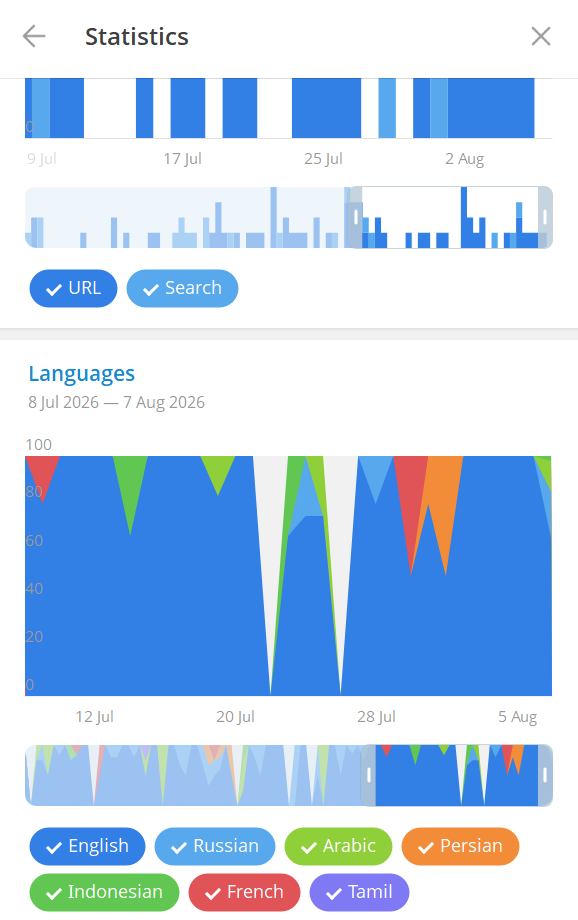
Telegram provides channel and post statistics for eligible communities, including views, growth, sources, languages, shares, reactions, and other activity. Marketers can add UTM parameters to external links and connect Telegram data to website analytics, CRM records, bot events, and sales data. Channels and Mini Apps can also support paid content, subscriptions, digital goods, affiliate programs, and advertising revenue where available.
How to Build a Telegram Marketing Strategy
Step 1: Choose One Primary Business Goal
Start with one main outcome for the first 30 to 90 days. Possible goals include building an owned audience, generating qualified leads, reducing support workload, increasing repeat purchases, distributing product updates, or validating a new offer. A vague goal such as “grow Telegram” makes it difficult to choose content or measure success.
Step 2: Define the Audience and Value Proposition
Describe who the channel is for, what recurring problem it solves, and why someone should follow it instead of relying on your website, email, or another social account. A clear promise might be “weekly fleet management benchmarks,” “daily language practice,” or “early access to local event tickets.”
Step 3: Choose the Right Telegram Setup
Use a public channel when discoverability and broad distribution matter. Use a private channel for customer-only resources, courses, or paid access. Add a group if members need to talk to one another. Use a Business account for private sales or support conversations, and add a bot only when automation has a defined job.
Step 4: Optimize the Profile and Onboarding Experience
- Use a recognizable name, logo, and public username.
- Write a concise description that explains who the channel is for and what subscribers will receive.
- Pin a welcome post with the value proposition, publishing schedule, important links, and next action.
- Create five to ten useful posts before launch so the channel does not look empty.
- Set permissions, moderation rules, and spam protection before promoting a group.
- Create separate invite links for major campaigns when you need source-level attribution.
Step 5: Create a Content System
Build three to five repeatable content pillars. For a small business, these might be education, product use cases, customer stories, behind-the-scenes updates, and offers. For an app or software product, the pillars might be tutorials, release notes, templates, case studies, and product feedback.
A useful starting mix is approximately 70% educational or practical content, 20% community or proof content, and 10% direct promotion. Treat this as a test, not a universal rule. Adjust it based on clicks, replies, conversions, and audience feedback.
Step 6: Publish for Attention, Not Just Frequency
A strong post usually has one clear idea, a specific opening line, readable formatting, and one primary call to action. Avoid sending several low-value messages in a row because each message can create another notification. If a topic needs depth, use a structured long post, a document, a video, or a link to a detailed page.
Step 7: Build Conversation and Trust
Use polls, reactions, comments, Q&A posts, direct messages, live sessions, and subscriber suggestions to learn what the audience needs. Respond consistently and publish clear moderation rules. Community quality matters more than raw message volume.
Step 8: Promote the Channel Ethically
Start with audiences you already have: website visitors, email subscribers, customers, app users, event attendees, and relevant social followers. Then add partnerships and paid acquisition. Do not scrape contacts, add people without permission, or buy fake members. Artificial growth makes view rate and conversion data less useful and can damage credibility with advertisers and partners.
Step 9: Measure, Learn, and Scale
Review results weekly at the beginning and monthly once the channel is stable. Compare content formats, topics, publishing times, acquisition sources, and calls to action. Scale the combinations that produce meaningful business outcomes, not merely the largest impression count.
How to Promote a Telegram Channel Organically
- Website placement: add the channel to relevant articles, contact pages, account dashboards, and post-purchase pages. Explain what the visitor will receive instead of using a generic “Join Telegram” button.
- Email and customer communication: invite existing subscribers when the Telegram channel offers faster alerts, exclusive content, or community access. Avoid moving people to Telegram without a clear benefit.
- Cross-promotion: collaborate with noncompeting channels that serve the same audience. Compare average post views and topic fit, not only subscriber count.
- Expert and creator partnerships: use interviews, guest posts, live sessions, and co-created resources. Give each collaboration a unique invite link or UTM-tagged destination.
- Searchable public content: use descriptive language in titles and opening lines so public posts can be understood and discovered. Do not stuff posts with repetitive keywords.
- Stories, reposts, and recommendations: publish formats that subscribers are likely to share, and keep the channel theme consistent so recommendation systems can understand its topic.
- Offline promotion: use QR codes on packaging, receipts, event materials, or in-store signage when the channel provides a useful follow-up experience.
- Referral incentives: reward meaningful actions such as qualified referrals, purchases, or content contributions rather than raw member additions.
How Telegram Ads and Paid Placements Work
The official Telegram Ad Platform allows advertisers to create sponsored messages and manage budgets. Telegram’s documentation states that ads can appear in public one-to-many channels with at least 1,000 subscribers. The platform uses an auction-based CPM model, and targeting options depend on the account and campaign setup.
Telegram emphasizes contextual advertising: its main ad page states that ads do not rely on personal user information and can be placed in specific broadcast channels. Before launching, review the current ad interface, policies, supported destinations, payment requirements, and geographic availability because these details can change.
Official Ads vs. Direct Channel Sponsorships
Official Ads provide a standardized platform, reporting, and placement controls. Direct sponsorships are negotiated with channel owners and may allow longer creative, images, custom timing, and native endorsements. The tradeoff is that direct deals require more due diligence.
For direct placements, request recent average views, audience geography, traffic sources, example sponsored posts, and past advertiser results. Check for sudden subscriber spikes or a large gap between subscriber count and normal post views. Use unique invite links or UTM parameters and agree on how long the post will remain visible.
Metrics to Track for Telegram Marketing
Choose metrics that match the business goal and measure them at a consistent time after publishing. Avoid comparing a post that is two hours old with one that has accumulated views for a week.
| Goal | Core metrics | How to interpret them |
| Audience growth | Net subscriber growth, source mix, cost per subscriber. | Growth is useful only when new subscribers continue viewing content and taking relevant actions. |
| Content reach | Views after 24/48 hours, view rate, forwards, shares. | View rate = post views ÷ subscribers × 100 at a fixed time. Track your own baseline by format. |
| Engagement | Reactions, comments, poll participation, replies, direct messages. | Engagement rate can use interactions ÷ views × 100. Define “interaction” consistently. |
| Traffic | Link clicks, sessions, engaged sessions, landing-page conversion rate. | Use UTM parameters to separate posts, partnerships, ads, and invite sources. |
| Leads and sales | Bot starts, qualified leads, purchases, revenue, CAC, ROAS. | Connect Telegram activity to CRM or commerce data rather than relying on platform views. |
| Retention and support | Repeat views, returning buyers, response time, resolved requests. | Look for sustained usefulness and operational impact, not only launch-week activity. |
H2: Telegram Marketing Content Ideas
- A short weekly roundup with links to deeper resources.
- Behind-the-scenes product or project updates.
- Step-by-step tutorials, checklists, templates, or swipe files.
- Polls that help prioritize new features or content topics.
- Customer questions answered in a recurring series.
- Case studies with a clear problem, approach, and result.
- Limited-time offers with transparent terms and a single action.
- Live Q&A sessions, webinars, or product demonstrations.
- Community spotlights and high-quality user-generated content.
- Long-form explainers formatted for Telegram’s richer 2026 editor.
Using Telegram Bots and Business Features
Automation should remove friction, not create it. Start with one high-volume, predictable workflow: answering common questions, collecting lead details, scheduling appointments, sending order updates, delivering a resource, or routing support requests.
Give users clear choices, explain what data the bot collects, and provide a way to reach a person. Test invalid input, timeouts, duplicate submissions, payment failures, and unsubscribe behavior. Review bot permissions and third-party access regularly.
For digital products and interactive experiences, Telegram supports bots and Mini Apps. Official Telegram updates have described payments through Stars and in-app services used by hundreds of millions of people. See the official overview of Telegram Stars and Mini Apps before designing a commerce flow.
Combine Telegram With Your Website, Email, and Mobile App
Telegram is usually strongest as one part of an owned marketing system. Your website can capture search traffic and explain offers in depth. Email can support longer lifecycle campaigns and account recovery. Telegram can deliver timely updates and community interaction. A mobile app can provide a branded home-screen experience, app-specific navigation, and push notifications for users who choose to install it.
If you already have a website, dashboard, catalog, or web service, AppsGeyser can help you convert your website into an Android app without building a native app from scratch. Use each channel for a distinct purpose instead of duplicating every message everywhere.
Privacy, Consent, and Brand Safety
Avoid describing all Telegram conversations as end-to-end encrypted. According to the Telegram FAQ, regular cloud chats use client-server/server-client encryption and are stored in Telegram’s cloud, while Secret Chats use end-to-end encryption and remain device-specific.
- Obtain consent before sending marketing messages or storing personal data.
- Do not add contacts to groups or channels simply because you have their phone numbers.
- Publish a privacy notice when a bot, form, CRM integration, or Mini App collects data.
- Collect only the information needed for the stated purpose and define a retention policy.
- Protect admin accounts with two-step verification, strong device security, and controlled permissions.
- Review official Telegram ad policies and applicable privacy, advertising, and consumer-protection laws for the markets you target.
- Create moderation rules and an escalation process for scams, impersonation, abusive content, and account compromise.
Common Telegram Marketing Mistakes
- Buying fake or untargeted members instead of earning relevant subscribers.
- Launching an empty channel with no useful content archive.
- Posting only promotions and giving subscribers no reason to remain.
- Copying every post from another platform without adapting it for Telegram.
- Sending too many separate messages and causing notification fatigue.
- Ignoring moderation, spam prevention, and account security.
- Using a bot without consent, a clear purpose, or a human fallback.
- Judging success only by subscriber count rather than views, clicks, leads, sales, and retention.
- Making unsupported claims about privacy, engagement, or guaranteed reach.
- Using partnerships or ads without unique tracking links and source-level reporting.
A Practical 30-Day Telegram Marketing Plan
Week 1 — Foundation: define the audience, goal, value proposition, format, profile, tracking plan, moderation rules, and five to ten launch posts.
Week 2 — Launch: invite relevant customers and owned audiences, publish three to five useful posts, ask one clear feedback question, and document the baseline metrics.
Week 3 — Distribution: test one partnership, one cross-promotion, or one small official ad campaign. Use separate invite links or UTM parameters for every source.
Week 4 — Optimization: compare acquisition quality, 24/48-hour views, clicks, comments, leads, and sales. Keep the strongest content pillars and stop tactics that produce low-quality subscribers.
Frequently Asked Questions
What is Telegram marketing?
Telegram marketing is the use of Telegram channels, groups, Business accounts, bots, Mini Apps, and advertising to reach an audience, communicate with customers, and generate measurable business results.
Is Telegram good for marketing?
It can be effective when your audience already uses Telegram or when direct updates, community discussion, automation, or in-app services fit the customer journey. It is less useful when the target audience is not active on the platform or the business has no recurring value to publish.
How can I promote a Telegram channel for free?
Promote it through your website, email list, customers, social profiles, relevant communities, events, partnerships, QR codes, searchable public content, and subscriber referrals. Give people a specific reason to join.
Should I buy Telegram subscribers?
No. Fake or untargeted subscribers usually do not view content or convert. They distort performance data and can damage credibility with partners and advertisers.
What is the difference between a Telegram channel and a group?
A channel is primarily a one-to-many publishing tool with unlimited subscribers. A group is designed for conversation and can support up to 200,000 members. A channel can link to a discussion group to enable comments.
How much do Telegram ads cost?
Telegram Ads use an auction-based CPM model, so pricing depends on targeting, competition, market, campaign settings, and the current platform rules. Direct channel sponsorship prices are negotiated separately. Always check the live ad interface before budgeting.
Are Telegram chats end-to-end encrypted?
Secret Chats are end-to-end encrypted. Regular cloud chats are encrypted in transit and at rest within Telegram’s cloud architecture but are not end-to-end encrypted by default.
How do I measure Telegram marketing success?
Track subscriber quality, views at a fixed time, reactions, comments, forwards, clicks, conversions, cost per subscriber, leads, revenue, CAC, and retention. Use UTM parameters, unique invite links, bot events, website analytics, and CRM data.
Final Thoughts
Telegram marketing works best when it gives people a clear reason to subscribe and a clear next step after they engage. Start with a focused channel or community, publish useful content, promote it through trusted sources, automate only the workflows that benefit users, and connect Telegram activity to business data. The goal is not the largest channel—it is a relevant audience that continues to read, respond, and act.